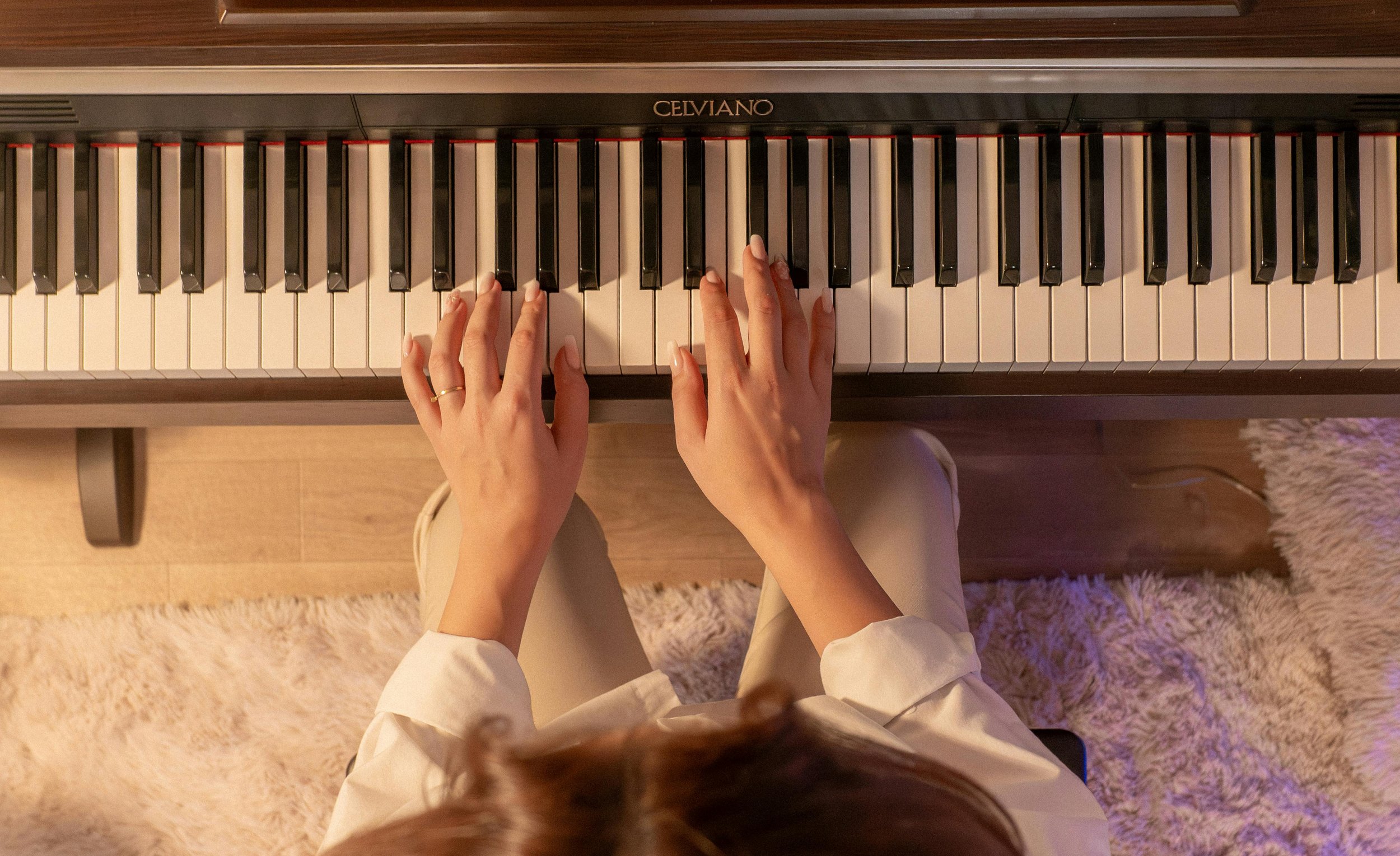
New year, new piano goals. Setting goals can be one of the most powerful ways to make progress on your piano learning journey. Without clear goals, practice can feel unfocused, and motivation can fade. With the right kind of goals, however, every practice session gains purpose, and progress becomes both visible and rewarding. But where do you begin? Here are some tips for setting piano goals.
Define the goals
Before setting specific goals, reflect on why you want to learn the piano. Do you want to play for relaxation, accompany singers, perform publicly, or master classical repertoire? Your long-term motivation will shape the type of goals you set. Someone learning for enjoyment may focus on playing favourite songs fluently, while an aspiring performer may prioritise technique and sight-reading. Knowing your “why” ensures your goals feel meaningful, not imposed.
Make your goals achievable
Many learners set goals that are too vague or too big, like ‘get better at piano’ or ‘reach grade 8 in a few weeks’. Instead, break long-term ambitions into smaller milestones. For example, a long-term goal might be to play a Chopin nocturne. Medium-term goals could include improving left-hand accompaniment patterns or mastering the technique of rubato. Short-term goals might be learning four measures hands-together at a slow tempo.
Make your goals measurable
Effective goals are clear and trackable. Rather than saying, ‘practice scales more’, try ‘play C major and G major scales, hands together, at 80 bpm with even tone’. Specific goals help you know exactly what to practice and when you’ve succeeded. Measurable goals also prevent over-practicing without direction.
Find a balance
Well-rounded piano progress comes from setting goals in different areas. Technique goals might include scales, arpeggios, or finger independence exercises. Repertoire goals focus on learning and polishing pieces. Musicianship goals can include sight-reading, ear training, or memorization. Balancing these areas keeps practice interesting and ensures long-term growth.
Set time-based goals
Progress doesn’t always happen on a predictable timeline. Instead of only focusing on results, set goals around consistent effort, such as ‘practice 30 minutes, five days a week’ or ‘review difficult passages daily’. These process-oriented goals are more controllable and help maintain motivation during plateaus.
Review and adjust your goals
As you improve, your goals should evolve. A piece that once felt impossible may become achievable, while new challenges emerge. Regularly reviewing your goals allows you to spot progress, identify obstacles, and adjust expectations. Flexibility prevents frustration and keeps learning enjoyable.
Finally, acknowledge your achievements, no matter how small. Progress on the piano is gradual, and perfection is not the goal - growth is. Each new skill, polished phrase, or confident performance is a step forward. By setting clear, balanced, and flexible goals, your piano learning journey becomes more structured.